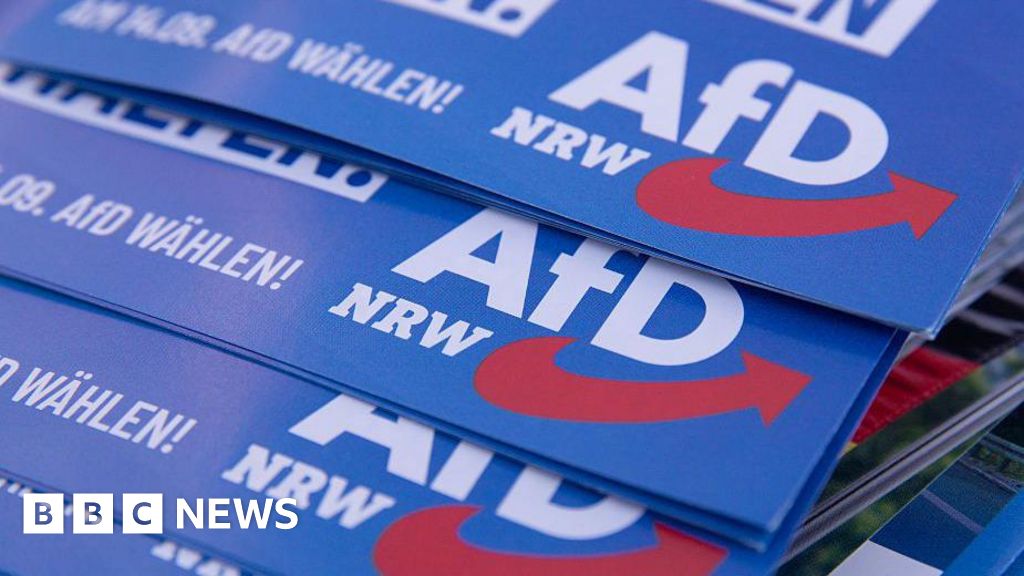
The Rise of the AfD: Challenging Germany's Political Landscape and Securing Prominence
Germany's political landscape, long defined by a stable consensus among established centrist parties, has witnessed a seismic shift with the rapid ascent of the Alternative for Germany (AfD). From its humble beginnings as a eurosceptic protest movement, the AfD has defied expectations, gaining significant electoral traction across the nation. This deep dive explores the complex interplay of social, economic, and political factors that have propelled the AfD into a formidable force, frequently positioning it as the second strongest party in polls and regional elections – a phenomenon often referred to as "afd platz zwei" – effectively overtaking much of Germany's old guard. Understanding this trajectory requires examining the historical undercurrents, immediate catalysts, and strategic maneuvers that have allowed the party to carve out a dominant niche in German politics.
From Post-War Taboos to Populist Tides: The Resurgence of Nationalist Sentiment
To grasp the AfD's rise, one must look back at Germany's post-World War II identity formation. Following the rigorous "de-Nazification" processes initiated in 1946, which saw millions screened and half a million Nazi elements purged from public life, a deep-seated aversion to nationalism took root. This vital cleansing established the Federal Republic's democratic foundation, enshrined in the 1949 Basic Law, which explicitly allows for the banning of parties that threaten the liberal-democratic order. For nearly eight decades, a collective societal "allergy" to anything reminiscent of nationalism suppressed traditional notions of national identity.
However, as some observers have noted, political and social phenomena, like physical systems, often exhibit a "rebound effect" – what some call "物极必反" (extremes meet in the middle or reversal of extremes). After nearly 80 years of suppressed national pride and an overwhelming emphasis on a post-national identity, a counter-current began to gather strength. The AfD emerged as the vehicle for this suppressed "potential energy" of nationalism, cleverly repackaged in populist rhetoric. It tapped into a latent desire among a segment of the population to articulate a stronger sense of German identity, unburdened by historical guilt, thus creating fertile ground for its anti-immigrant and anti-EU stances. This historical context provides a crucial backdrop to the AfD's ability to mobilize sentiment that had long been considered taboo.
Exploiting the Void: Immigration, Economic Disparity, and the Old Guard's Stagnation
The AfD's journey from a niche party of economic academics and conservative intellectuals, initially skeptical of the Euro, took a decisive turn with the 2015 European refugee crisis. Chancellor Angela Merkel's decision to open Germany's borders to a large influx of refugees triggered rapid demographic and cultural shifts, fundamentally altering the political landscape. The AfD astutely recognized this as a potent issue capable of mass mobilization. Swiftly adjusting its platform, it placed fierce opposition to large-scale immigration and a renewed emphasis on national identity at its core. Voters who felt alienated by the government's immigration policies, perceiving a loss of control and cultural cohesion, began to gravitate towards the AfD.
Beyond immigration, deeper structural issues contributed to the AfD's surge. Germany's traditional major parties – the CDU/CSU and the SPD – had long dominated the political center. Years of grand coalitions, particularly between the SPD and CDU, led to a perception of policy convergence and a lack of fundamental differentiation. Many voters, especially those struggling at the lower end of the socio-economic spectrum, felt their voices were no longer represented within this established political system. The AfD provided an outlet for their frustration and discontent, positioning itself as the voice of the unheard.
The socio-economic realities of East Germany proved particularly fertile ground for the AfD. Decades after reunification, significant economic disparities persist between East and West. Many East Germans feel marginalized, their economic conditions and social status having failed to align with the promises of unity. The AfD skillfully capitalized on this simmering resentment, presenting itself as "the people's party" fighting against the perceived "elite" in Berlin. This narrative resonated strongly with anxious middle-aged and elderly voters in the East, contributing significantly to the AfD's ability to achieve "afd platz zwei" standings in regional polls and specific constituencies, even leading to instances where they defeated the venerable Social Democratic Party in parliamentary elections in eastern states. For more details on these contributing factors, explore
AfD's Ascent: Unpacking the Factors Behind Germany's Populist Surge.
The Digital Battlefield and Culture Wars: AfD's Strategic Communication and Appeal
The AfD's rise has been inextricably linked to its sophisticated and often aggressive use of social media. While traditional mainstream media outlets frequently criticized or sought to limit the party's exposure, platforms like Facebook and Telegram provided an unfettered channel for direct communication with voters. The AfD circumvented traditional gatekeepers, precisely targeting messages, creating information bubbles, and generating public discourse around its preferred narratives. Many AfD supporters increasingly distrust mainstream media, forming their own "information ecosystems" where the party's views are reinforced and alternative perspectives often dismissed. This strategic mastery of digital communication has been a critical enabler of its growth.
Coupled with its digital prowess, the AfD adeptly exploited cultural anxieties and security concerns. Despite overall crime rates in Germany not necessarily soaring, the party skillfully amplified specific incidents, such as migrant-related crimes or sexual assault cases, to foster an impression of societal decline and insecurity. Simultaneously, AfD supporters often express unease with Germany's increasing cultural diversification and the prominence of issues like climate policy, gender equality, and LGBTQ+ rights in public discourse. They perceive their traditional values and lifestyles as being ignored, marginalized, or even under attack. This profound cultural insecurity provides another powerful draw for AfD voters, allowing the party to consolidate its base and extend its reach. For a deeper dive into these catalysts, see
Immigration, Economics & Social Media: Fueling AfD's Rise in Germany.
AfD's Ascendant Trajectory: Navigating Electoral Wins and What it Means for Germany
The cumulative impact of these factors has propelled the AfD into a powerful political player, regularly achieving "afd platz zwei" in public opinion polls and significant electoral breakthroughs, particularly in the eastern federal states. This indicates a profound fragmentation of Germany's political landscape, where the traditional dominance of centrist parties is increasingly challenged by the expansion of both the Greens on the left and the AfD on the right. The AfD's presence has shifted the entire conservative spectrum, offering a more hardline option than the CDU/CSU and forcing established parties to react and adapt, often by adopting tougher stances on issues like immigration.
On a local level, the AfD has been strategically building its organizational networks, transitioning from a mere protest party to one with growing experience and influence in municipal and state parliaments. This institutionalization further solidifies its political impact and demonstrates its long-term commitment to reshaping German politics. The electoral wins and sustained high poll numbers, emblematic of the "afd platz zwei" phenomenon, signal that the party is no fleeting protest movement but a significant and entrenched component of the German political system.
The rise of the AfD is not merely a German anomaly but a potent symptom of broader trends in contemporary Western politics: the global rise of right-wing populism, the increasing polarization of societies, and the societal dislocations wrought by globalization. Its ability to repeatedly secure high electoral positions, often displacing traditional parties, underscores a deep-seated discontent and a yearning for clear, albeit often simplistic, answers to complex challenges.
In conclusion, the AfD's journey from a niche protest movement to a major political force, consistently challenging for or achieving "afd platz zwei" status in various electoral contexts, is a multifaceted story. It is born from a complex interplay of historical suppression of nationalism, strategic exploitation of the 2015 refugee crisis, economic grievances in East Germany, perceived stagnation of traditional parties, sophisticated use of social media, and tapping into deep-seated cultural anxieties. Regardless of individual political perspectives, the AfD has undeniably cemented its position as an unavoidable and highly influential part of Germany's political future, posing significant questions for the nation's democratic institutions and societal cohesion.